Showing posts with label City of Grand Rapids. Show all posts

Wednesday, February 18, 2015

Backyard Chickens in the city?

If you are one of the people in Grand Rapids who has been dying for the city commission to allow the city to move further along with the Slow Food movement and allow residents to keep chickens, this month might hold out hope for you.

On Tuesday, February 10, city leaders passed several amendments to a proposed ordinance, modifying the circumstances under which home owners could keep chickens on their property. Among these, they lowered the lot size required to keep 4 chickens from 5,000 square feet to 3,800 square feet which would allow more residents to keep chickens. Commissioners discussed among themselves a provision requiring neighbor consent. If a neighbor sharing a lot line objects to the chickens during the 21-day period after a permit is filled out, no chickens would be allowed.

There was disagreement between the commissioners about whether to allow chickens on duplex properties, but this passed 4-3. Multi-family buildings like apartment complexes will not be allowed to keep chickens. The commission also specified that chickens not be housed within 50 feet of any backyard catch basin, to ensure that any chicken waste would not spread into the water system. Roosters, of course, will not be allowed.

The number of chickens to be allowed per property is still undecided. Commissioners will meet again and vote on this ordinance on February 24. If passed, the two-year trial run would begin May 1, 2015.

It's well known that there are already chickens on many properties throughout the city, and not just on properties that can accommodate the provision that chickens must be housed no closer than 100 feet from any other dwelling, dwelling unit, spring, stream, drainage ditch, or drain. In neighborhoods largely populated by immigrants, they are particularly present - but illegally. Some families have tried keeping chickens semi-secretly but neighbors complained and they were cited and fined.

The passing of this proposed ordinance would allow residents who wish to follow local law to keep chickens and not violate their consciences. Many of these families already have gardens within the city, and are willing to put the time and the money into modifying their landscapes to make them more suitable for chickens, whether that means adding a chicken house, a small pond, or fencing off part of their yard to make room. They believe strongly that adding chickens would strengthen community and be a learning experience for their children and neighbors about where real food originates.

Frankly, given the city's reputation for food innovation, this is long overdue. It's time to make that dream a reality in Grand Rapids.

Friday, December 26, 2014

Doings and Deeds, a Grand Rapids history, part 2

For the previous installment, see Part 1.

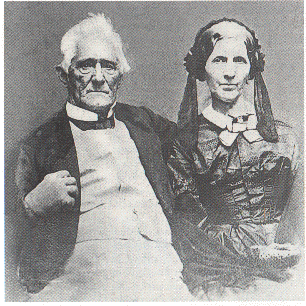
In the early 19th century, the now established Three Fires tribes faced a European invasion when in 1821, the Treaty of Chicago ceded the entire region south of the Grand River to the United States. Baptist missionaries built in the villages on the west bank of the Grand River. In this same year, 1827, the shrewd Louis Campau set up shop, eventually purchasing 72 acres of land where downtown stands today - for $90. A number of his relatives settled in the area and also bought land. For a time the language spoken “downtown,” then, was not an Anishinabek dialect, nor English, but French.


Campau, Lucius Lyon, and others prospered through trade and the buying and selling of city lots. The downtown developed, and the people of the Three Fires were slowly pushed out or left. Louis Campau lost a great deal of money in land speculation when the land boom's bubble burst. He had signed a surety bond for the goods in his brother Toussaint’s store, and did not have the money to cover the bills when it failed. Campau was forced to sign over much of his property until all these debts could be sorted out. And there went the neighborhood again. In 1838 the City of Grand Rapids was officially incorporated.


campaus.gif

Campau’s entrepreneurial success, his energetic wheeling and dealing, and the displacement of the native peoples who had lived in villages here undoubtedly caused friction and hard feelings over time, but he remained on good terms with Chief Noonday and had many Indian friends all his life. Campau could be generous to a fault, and all of the city was welcome first in his log house, and then in the mansion he built on the southwest corner of Fulton and Gay.

With city incorporation, more settlers arriving, and a more formal city emerging, some of the trappings of East Coast civilization emerged. Chages at first were small and slow. Campau renamed the Indian footpath along the river Monroe Street after President Monroe. Other trails leading to Campau's trading post were eventually called by recognizable names: Butterworth, Kalamazoo, Lake Drive, Plainfield, and Walker. Joel Guild built the first frame house with lumber sawed at an Indian mill in 1833. That Christmas in a letter to relatives, Guild wrote that the area was "settling very fast with respectable citizens." It was much easier for settlers to travel to Michigan and all parts west after the Erie Canal was complete in 1825. Guild mailed that letter from one of the area's two post offices.

Major earthworks projects reshaped the river and removed Prospect Hill. Farms sprung up in all directions radiating from the village. The Lucius Lyon Salt Works opened in 1842, and the Granger & Ball gypsum mill began operation. John Ball's name appears first in the city's records in 1836, and when the census was first taken in 1845, there were 1,510 residents. By this time the village had shops, mills, factories, tanneries, public houses, smiths, and three doctors. The first Grand Rapids dentist, J.T. Collier, who advertised his services arrived in 1843.

The villagers in Grand Rapids began building more formal churches. The Congregational Church at the corner of Division and Monroe had a thousand-pound bell that tolled the hours; it was one of four local places of worship. When the first east-west stone-foundation bridge was build in 1845, the city was beginning to feel permanently settled. It had by-laws, a fire barn and fire engine, paid trustees, and board sidewalks. The times, they were a-changin'.


Friday, June 27, 2014

Is Grand Rapids regulating the sharing economy too strictly?

Recently Time Magazine included Grand Rapids in a list of cities they believed were “attacking” the sharing economy. The sharing economy, for those not in the know, is the increasingly popular practice of individual people renting out their “stuff” for cash. Before internet sites were developed to connect people who need particular items with people who have particular items, the average person either borrowed whatever he needed from friends or neighbors, went to a rental shop, bought it outright, or went without. But as websites connecting people proliferated, and the economy tanked, people found their willingness to rent out their spare bedroom for a weekend, their car for a trip to the airport, or an antique necklace for a wedding increased - as long as the rental fee was worth their while. Renters decided they were willing to take perhaps a bigger risk of renting from a stranger if the price was low enough.

Websites that have thrived using this new person-to-person model include Uber, Lyft, Airbnb, Snapgoods (now relaunched as Simplist), and many more. There are a number of built-in problems with this business model, however. Risk is higher, even if businesses cover the losses of the occasional bad-faith renter or provider. Liability is, of course, greater with unbonded, unlicensed, unregulated service providers. One personal injury lawsuit can erase years of diligently made earnings. And, perhaps more importantly, the low overhead required for service providers to enter the market makes them a threat to businesses that operate more traditionally.

Now services that specialize in offering rooms, rides, and equipment cheaper are facing pushback from established businesses or industries or even cities. This is similar to the conflict between food trucks and restaurants seen in Grand Rapids, with restaurant owners pressuring the city to limit the scope of the food trucks’ operations so their bottom line would not suffer.

Unable to compete for lowest price because the cost of following burdensome government and union regulations is so high, businesses have turned to government to demand these new sharing services be either made illegal or be made subject to the same regulations they must follow.

Grand Rapids is only one of a number of cities that have had to grapple with this problem. And as of June 12, the city’s planning commission has voted 4-3 to support regulations that limit Airbnb operators to one-room rentals of only two adult guests. They must also be licensed and the city will only issue 200 such permits to allow for Airbnb accommodations. The city will also notify neighbors when a permit is given.

Whether this is “attacking” the sharing economy depends on your opinion. There is a price to be paid for safety and dependability, but the rapid growth of sharing businesses suggests it may be too high.

Friday, May 16, 2014

Is Crime in GR What It Seems?

Have you seen this map of Grand Rapids yet?


It's been passed around Facebook. Crime and proximity to crime is a concern for everyone who lives in the city and for property owners who want to maintain their investment or keep their merchandise safe. On the news there are regular reports of bank robberies, jewelry store heists, murders, sexual assaults, meth lab busts, fraud, and drunk driving. These accounts can be anxiety provoking, but they obscure what people are really concerned with: calculating the risk of living and working in Grand Rapids.

So what is the real crime rate like? First of all, as the map above suggests, it's different in different parts of the city. If you want to know the most recent police activity in your area, go to the Grand Rapids page at Crime Mapping and take a look at the rundown. The detail on various arrests is also helpful for evaluating the risks of being in certain areas of Grand Rapids if you are unfamiliar with them and don't know what to expect. You may not be concerned with arrests for "minor in possession of a controlled substance" or "vandalism" if you just want to do some shopping. You might not want to park in an area with robberies and assaults, though. Or motor vehicle thefts.

As you might assume, if you are familiar with news reports, the areas on the map with the most offenses are Downtown, the Northwest Side and the Southeast Side. Currently on the map the downtown area has a number of assaults, vandalism, car thefts, and burglaries. The Westside has also had a lot of vandalism, a number of car break-ins, and rash of assault. The Southeast Side has had several cases of arson, more assault and a spate of drugs and weapons crimes. Also there's a bit of fraud. These are all good things to know if you are thinking of opening a small business here or sending your daughter to live on the Pew campus at GVSU. If you want to know the safest places to live, the Neighborhood Scout website assesses the general safety of various neighborhoods for you.

But safety is a bit of a relative concept, at least as most individuals are concerned. We all know that crime exists and that some people will be victimized by it. But what are the chances it will happen to us, we want to know. And happen multiple times? At least in that respect, there's significant good news. Recorded crime has been dropping in the area for decades, despite a drop in police officers on the streets. Between 2003 and 2011, violent crime in Grand Rapids was down 33%, and property crime decreased 34%. Many people assumed that the hard times caused by the Great Recession would have increased crime, but that did not occur, whether from increased use of surveillance cameras or demographic change (the "aging" of America or as posited by the authors of Freakonomics, an unintended consequence of eugenics via increased rates of abortion).

So while it's good to be cautious and aware of what is going on around you - and even better to have an active neighborhood association and alert neighbors - overall, we have less to worry about than we did a decade or more ago. And that is good news. This isn't Mayberry, but it sure isn't Detroit or Flint either. 

Thursday, February 13, 2014

Is Grand Rapids in for another Great Deluge this spring?

After months of snow and frigid temperatures, parts of West Michigan have the equivalent of 5 inches of rain, in frozen form, blocking their driveways, piled up against their houses and businesses, and in their streets. The usual pattern of accumulation, melt, accumulation, melt hasn't proved true this year, and unless we get a very gradual thaw, this could be a serious problem for many home and business owners in the coming weeks because the water has to go somewhere.

Beginning next Wednesday, we are in for a mini-thaw that will probably feel like summer after temperatures that have only climbed into the double digits at midday. That sudden increase will melt at least some of the standing snow and may create significant problems.

In recent days many have worried their roofs may collapse from the weight of all that snow, but under a thaw, new problems crop up. The snow accumulated on a well insulated roof will melt and refreeze and may create ice dams instead. Backed up ice can get under roof shingles and drip through ceilings, it can pull gutters out of shape or even off roofs, and it can suddenly break and fall off of a roof dropping a heavy weight on whatever lies beneath. Keep an eye on your roof to make sure this doesn't happen to you.

Ice can also melt and cause flooding. Get whatever snow you can away from the foundation of your house so that the water flows away from and not into it. We all know that melts can create ice jams and dam up rivers too. This is largely outside of our control, and we can only hope that the City of Grand Rapids floodwall system is in decent shape as there hasn't been time to entirely repair or improve the floodwall yet.  It only barely held out last year, and there was no reason to panic about flooding during the relatively mild winter of 2012-13. That winter was certainly not this winter. We may get some rain as well, which would only add to the runoff problems.

There's no reason to panic now. We can hope that the mini-thaw will not be problematic and will clear up the streets and melt down already formed ice dams. Just bear in mind that if you live near a river or in a place water pools, you should have a plan for dealing with it in mind now - before it's a problem.