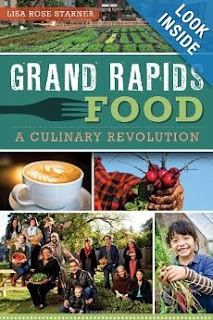
If you are one of the people in Grand Rapids who has been dying for the city commission to allow the city to move further along with the Slow Food movement and allow residents to keep chickens, this month might hold out hope for you.
On Tuesday, February 10, city leaders passed several amendments to a proposed ordinance, modifying the circumstances under which home owners could keep chickens on their property. Among these, they lowered the lot size required to keep 4 chickens from 5,000 square feet to 3,800 square feet which would allow more residents to keep chickens. Commissioners discussed among themselves a provision requiring neighbor consent. If a neighbor sharing a lot line objects to the chickens during the 21-day period after a permit is filled out, no chickens would be allowed.
There was disagreement between the commissioners about whether to allow chickens on duplex properties, but this passed 4-3. Multi-family buildings like apartment complexes will not be allowed to keep chickens. The commission also specified that chickens not be housed within 50 feet of any backyard catch basin, to ensure that any chicken waste would not spread into the water system. Roosters, of course, will not be allowed.
The number of chickens to be allowed per property is still undecided. Commissioners will meet again and vote on this ordinance on February 24. If passed, the two-year trial run would begin May 1, 2015.
It's well known that there are already chickens on many properties throughout the city, and not just on properties that can accommodate the provision that chickens must be housed no closer than 100 feet from any other dwelling, dwelling unit, spring, stream, drainage ditch, or drain. In neighborhoods largely populated by immigrants, they are particularly present - but illegally. Some families have tried keeping chickens semi-secretly but neighbors complained and they were cited and fined.
The passing of this proposed ordinance would allow residents who wish to follow local law to keep chickens and not violate their consciences. Many of these families already have gardens within the city, and are willing to put the time and the money into modifying their landscapes to make them more suitable for chickens, whether that means adding a chicken house, a small pond, or fencing off part of their yard to make room. They believe strongly that adding chickens would strengthen community and be a learning experience for their children and neighbors about where real food originates.
Frankly, given the city's reputation for food innovation, this is long overdue. It's time to make that dream a reality in Grand Rapids.
Showing posts with label food. Show all posts
Wednesday, February 18, 2015
Thursday, June 12, 2014
The Grand Rapids food truck controversy
Food trucks are coming to Downtown this summer and will be offering their food experiences at Wege Plaza, adjacent to Rosa Parks Circle. The city approved the Grand Rapids Art Museum’s request for a permit to allow food trucks outside their premises, and the trucks have already been serving food there since the end of April.
Food truck cuisine has been somewhat scarce in Grand Rapids, despite all the growth, change, and new social opportunities downtown. Many restaurateurs vigorously opposed the Planning Commission’s approval of food trucks back in 2012. They felt that food trucks had the unfair advantage of significantly lowered overhead costs and would take business away from brick-and-mortar restaurants downtown. The city temporarily sided with restaurant owners, ruling that food trucks could operate only when parked on private property. This had a dampening effect on food truck initiative as it severely limited the scope of where they might operate.
Others, including Rick DeVos, argued that food trucks and restaurants are the apples and oranges of dine-out eating, not truly comparable, and that greater competition will result in better food choices for Grand Rapidians overall. The food truck experience, at least at present, is more serendipitous, dependent on good weather and the right timing, and the menu is limited. You like what they are serving or you don’t. Some GR food trucks don’t even have websites, just social media platforms on Facebook or Twitter.
Food enthusiasts have been waiting impatiently for food truck options partly because the entrepreneurs who take on the food truck challenge tend to offer a varied menu with an emphasis on local and sustainably grown ingredients. A glance at A Moveable Feast’s menu reveals items like the Crispy Quinoa Burger and Southwestern Fish Tacos made from these ingredients: Lake Michigan whitefish, cilantro-lime red cabbage slaw, flour tortilla, and chipotle aioli. The food is vegetarian-friendly with a number of soups and sides suitable for any palette. The people of Grand Rapids were enthused enough about this possibility to fund A Moveable Feast’s start-up costs through Kickstarter this spring.
Another option is What the Truck, an offshoot of The Winchester restaurant, with the mission of “bringing better street food to Grand Rapids, Michigan.” Focusing on burritos and tacos instead of sandwiches, What the Truck is also at the GRAM this summer as well as elsewhere around the city including at the Fulton Farmer’s Market, dishing out a unique menu highlighting meat and produce from the area. They have a breakfast and a lunch menu.
While restaurants and food trucks will compete with each other, it doesn’t have to be a lose-lose situation. Pat Flynn, owner of Foodtruckr, a food truck industy resource website says, “As a small business owner myself, I appreciate the struggles of my fellow entrepreneurs in all industries, online and offline. The restaurant industry is particularly challenging. As a former architect whose number one desire was to design restaurants, I know first hand just how strenuous this business can be. I root for restaurant owners and their businesses. I also root for food truck owners. Food truck owners share the same passion and determination as restaurant owners. And I've come to admire the resilience and creativity that food truck owners possess in this competitive and innovative marketplace. I believe that type of healthy competition is good for everyone. And I believe that like-minded entrepreneurs should band together, especially when they devote themselves to the happiness of a common customer base. In the end, delighting customers with scrumptious meals is what matters. Restaurants and food trucks both have valuable roles to play. I believe in abundance, not scarcity. I believe that the world is a better place with both restaurants and food trucks. My stomach seems to agree with me!”
This summer we will see whether food trucks are a significant challenger to brick-and-mortar restaurants in Grand Rapids and whether vigorous competition inspires improvement in our local food scene.
Monday, April 28, 2014
Beginning to evaluate fruit damage from The Winter of 2014
Now that the snow is gone and we appear to have dodged spring flooding, for the most part, we will start to see what kind of damage the three rounds of polar vortex did to our trees and landscaping.
Earlier this month Michigan State University wrote a summary of their evaluation of blueberry crop damage due to road salting and extreme low temperatures. Blueberry bushes exposed to salt because of their close proximity to highways (up to 100% in some places) had a higher dieback rate than blueberry bushes exposed just to cold, but both suffered substantial damage: "in areas where minimum temperatures dropped below 0 F for several days, we may expect to observe winter damage to blueberries in the range of 20 to 61 percent."
Apples and pears can take colder temperatures, but stone fruits like peaches and cherries are more vulnerable. Grape vines for table grapes and Michigan's growing wine industry were affected as well, although a decent grape crop is still a possibility even with significant bud loss.
Besides damage from the weight of snow and ice, trees and bushes also suffered predation from hungry animals who could not find other food in the harsh winter. Deer, rabbits, and mice nibbled at winter wheat and tree bark, inflicting an unusually high amount of damage on fruit trees.
It's also obvious that everything is going to be later than normal. It's the end of April, and tulips and daffodils are out. In many ways the long, slow warm up was the best possible outcome, both for avoiding flooding and for fruit outcomes, but it means later crops and smaller planting windows for early spring crops like sugar beets. The fields have taken a long time to drain as well, with so much snow melt. Fortunately, April was not an overly wet month - a blessing.
Michigan is fortunate to have such a diversity of crops grown - all of our tables are improved by the abundance and variety of Michigan agriculture. But spring is a anxious time for farmers in many crop industries, particularly after the abnormal winter we just experienced. It seems likely that we as consumers won't see the vacuum of fruit as in 2012, but say a prayer or keep your fingers crossed for the farmers anyway. They need good crop years to reinvest in our foodshed and themselves.
Thursday, November 28, 2013
Thankful for
We Grand Rapidians have many things to be thankful for in regards to our hometown. Here are a few that come to mind:
Unlike so many Midwest cities, Grand Rapids is not dying, but blooming. The downtown looks better than it ever has and there are so many more things to see and do in Kent County.
A lower unemployment rate than the rest of Michigan , and, at 6.4%, lower than last year. Full-time, well paid positions with benefits are still pretty scarce, but jobs are out there, at least.
Many of those jobs come from our agricultural sector, which has grown 8% since the start of the Great Recession. Michigan is second only to California in the diversity of crops grown here. We owe much of that to our location and the abundance of water in the state. The Great Lakes also provide a buffer from the harsher weather other northern states experience. Michigan's more temperate climate allows for cultivation of many fruit trees and bushes that produce an abundance of table wealth for us to enjoy and profit from. Good, rich soil also helps.
All of that abundance is made available in the state's 200 or so farmers markets. Pure Michigan brings up 41 farmers markets just within 20 miles of Grand Rapids. That's a lot of fresh, often organically grown or sustainably raised food to sample. And our growing food scene reflects it! Cooking a diverse range of great, healthy food made with healthy ingredients has never been easier. No food deserts here.
We are sheltered from much of Nature's fury by our location as well. Last week, the Midwest and particularly Illinois experienced devastating tornadoes which resulted in 8 deaths, huge amounts of property and environmental damage. People in Peoria will be clearing rubble and trimming damaged trees for a long time to come. While we occasionally see tornadoes in West Michigan, we are spared most of them and the most ferocious of them. We also don't have earthquakes, hurricanes, cyclones, tsunamis, long term drought, or out of control wildfires. We don't even have to deal with poisonous snakes or insects. If you can handle a long, gray winter, that's about the extent of our weather horrors. We can be grateful for that.
Finally, Grand Rapids has a history of philanthropy and volunteerism. Grand Rapids residents volunteer at a rate of 37.6%, significantly over the national average, and the city is Michigan's most generous. We all benefit from the giving nature of Grand Rapids's citizens, in large and small ways.
Not everyone loves Grand Rapids, but many of us are thankful to live here. Happy Thanksgiving to all of our readers!
Tuesday, October 22, 2013
Reveling in a Reexamination of the GRNow Gems
Earlier this year, GRNow posted a list of what it called "the GRNow Gems." Twenty-six different locations and activities populated what the website properly called "hidden (and not so hidden)." First on the list was Honey Creek Inn, a place I've not been to, probably because it's actually located in Cannonsburg--not Grand Rapids. Other oddballs technically located outside city limits included Herman's Boy in Rockford and Tokyo Grill in Kentwood, two more establishments I've not had the chance to experience. Herman's Boy sounds like it's straight out of the past in a really good way--unreasonably low prices in this evermore-expensive world and premises that include a deli, bakery, fudgery (is fudgery a word?), and a coffee grinder. Their website says you can get a bagel for 65 cents!! So much, all in a converted farmhouse. Tokyo Grill, according to GRNow's reporting, has better sushi than Ju, Sushi Kuni, and Maru--a serious claim, if you ask me. I'd love to find out for myself, but my vegetarian ways (yes, that means I don't eat fish) would make judging their sushi a little unfair. I could compare the veggie-friendly options and base my ruling on that but let's be honest: Sushi is all about the sea creatures inside.
Others on the list brought me pleasure because I've actually been to them and know how great they are. Honorable mentions Cult Pizza (you know I love you) and Bartertown (same goes for you): These establishments are employee-run and serve up some of the best vegetarian and vegan food I've ever had, in this city and elsewhere. Their cooking is part of the reason that I'm still not eating meat--their concoctions proved to me, long ago, that a diet can still be delicious without meaty flesh.
Tacos el Cuñado made the GRNow list too. I hadn't been to this Mexican joint located on the westside until their head honchos decided to open a satellite location in the Downtown Market. Since opening there, I've been thrice: Once with a crew of my coworkers, once with my roommate, and once with my mother. The fact that I went here with my mother--she was visiting for my birthday--to have some of the best Mexican in town is saying something. But missing from the list in regards to Mexican is Taqueria San Jose on Division. Seriously, you need to try this place if you haven't yet. It's right across the street from the Salvation Army in an old drive-up restaurant. Go! Now! You won't know what you've been missing until you've touched one of their tacos to your tongues! And be sure to try their sauces--they're to die for.
More from the list: Hopcat and Founders, of course. Other obvious inclusions are San Chez Bistro, Madcap Coffee, Marie Catrib's, Martha's Vineyard, Nantucket Baking Company, the Fulton Street Farmers Market, and Robinette's. Exiting the realm of consumable goodies, we have Frederik Meijer Gardens, "Antiquing in an Old Furniture Building," Heritage Hill, Redux & Argos, and Vertigo Music. A few of these surprised me, but they are welcome additions considering how fantastic they all are or seem to be. The list, with its greatness and its absences, reminds me just how fantastic we have it here. Grand Rapids has come a long way from its days of making primarily chairs and office furniture. Of course, we could argue about what's on it and what's not and what should be there--everyone has an opinion based on their own experiences--but let's just cherish what we've got instead: We've got it all.
Others on the list brought me pleasure because I've actually been to them and know how great they are. Honorable mentions Cult Pizza (you know I love you) and Bartertown (same goes for you): These establishments are employee-run and serve up some of the best vegetarian and vegan food I've ever had, in this city and elsewhere. Their cooking is part of the reason that I'm still not eating meat--their concoctions proved to me, long ago, that a diet can still be delicious without meaty flesh.
![]() |
| Taqueria San Jose!! | Source: Eating Our Way Through Grand Rapids |
More from the list: Hopcat and Founders, of course. Other obvious inclusions are San Chez Bistro, Madcap Coffee, Marie Catrib's, Martha's Vineyard, Nantucket Baking Company, the Fulton Street Farmers Market, and Robinette's. Exiting the realm of consumable goodies, we have Frederik Meijer Gardens, "Antiquing in an Old Furniture Building," Heritage Hill, Redux & Argos, and Vertigo Music. A few of these surprised me, but they are welcome additions considering how fantastic they all are or seem to be. The list, with its greatness and its absences, reminds me just how fantastic we have it here. Grand Rapids has come a long way from its days of making primarily chairs and office furniture. Of course, we could argue about what's on it and what's not and what should be there--everyone has an opinion based on their own experiences--but let's just cherish what we've got instead: We've got it all.
Labels:
beer,
best of,
division,
farmers market,
food,
fulton,
gardens,
grand rapids,
GRNow,
hidden gems,
Madcap,
Marie Catrib's,
maru,
meijer,
Mexican,
San Chez,
san jose,
tacos,
vegan,
vegetarian
Tuesday, September 17, 2013
Let the (Food Truck) Revolution Commence!
With ArtPrize just a single day away, the city is stirring. Art is popping up left and right, kind of like weeds--if weeds were expressive, aesthetic, and created by human beings. Grand Rapids is in a liminal period, biding its time; it's in a cocoon and the city is ready to break through, it's ready to blow the minds of Michiganders, Americans, and citizens of the world alike.
But even its own citizens may be surprised to hear a decision that was recently passed down by the city. Remember that huge conflict surrounding food trucks that happened last year? I do. It was the brick-and-mortar restaurants versus the food truck vendors, with every hungry Grand Rapidian caught in-between, salivating over what could be. Many of us had eaten from the Silver Spork (RIP) or What the Truck outside of the Fulton Street Farmers Market at that point (and have since), but this just wasn't enough for vendors and patrons--both parties wanted to see food trucks in spots scattered around our ever-coveted downtown.
Upon hearing this, some restaurant owners began shaking in their boots--they were scared that a quick-and-dirty option like ye olde food truck would eat into brick-and-mortar profits. And they're probably right: If I'm in a hurry and I can get something fast--and it's good--that's what I'm going to do, almost every time. This means that the business-types who work downtown would probably head to a food truck instead of sitting down at Cinco de Mayo or Bull's Head Tavern, at Donk's (formerly Taco Boy) or Tre Cugini. By the end of the Great Food Truck Conflict of 2012, it was the frightened restaurateurs who had won, not the food truckers, despite the single concession given by the city: Food trucks could now set-up shop on private property. On paper, this may have seemed like a victory for food trucks, but I think it was a ruling that made citizens think that food trucks were allowed. In reality, it was a decision that was in-line with the worried restaurant owners. Few food trucks took advantage of this change, proving that it perpetuated the status quo.
Flash forward to about a week ago: That was when the city decided that it will allow two food trucks outside of the Grand Rapids Art Museum for 200 days per year. This means that some of the aforementioned businesses really will have something to worry about. Instead of complaining about it and trying to fight the ruling, the efforts of fearful owners should be used toward innovation--revamping their menu, opening up new options, and exploring unknown territories to catch the eyes, ears, and taste buds of those seeking a place to fend off hunger in the future. They might take a cue from GR breweries and reduce restaurant waste or go organic. An article from WZZM 13 said that the GRAM will be allowed to begin its life as a food truck station after ArtPrize is over, since the trucks are allowed to be around during special events like one of the world's largest art competitions. I for one can't wait for this, since it could easily make our already-great food scene into something even better.
But even its own citizens may be surprised to hear a decision that was recently passed down by the city. Remember that huge conflict surrounding food trucks that happened last year? I do. It was the brick-and-mortar restaurants versus the food truck vendors, with every hungry Grand Rapidian caught in-between, salivating over what could be. Many of us had eaten from the Silver Spork (RIP) or What the Truck outside of the Fulton Street Farmers Market at that point (and have since), but this just wasn't enough for vendors and patrons--both parties wanted to see food trucks in spots scattered around our ever-coveted downtown.
Upon hearing this, some restaurant owners began shaking in their boots--they were scared that a quick-and-dirty option like ye olde food truck would eat into brick-and-mortar profits. And they're probably right: If I'm in a hurry and I can get something fast--and it's good--that's what I'm going to do, almost every time. This means that the business-types who work downtown would probably head to a food truck instead of sitting down at Cinco de Mayo or Bull's Head Tavern, at Donk's (formerly Taco Boy) or Tre Cugini. By the end of the Great Food Truck Conflict of 2012, it was the frightened restaurateurs who had won, not the food truckers, despite the single concession given by the city: Food trucks could now set-up shop on private property. On paper, this may have seemed like a victory for food trucks, but I think it was a ruling that made citizens think that food trucks were allowed. In reality, it was a decision that was in-line with the worried restaurant owners. Few food trucks took advantage of this change, proving that it perpetuated the status quo.
| Could the Silver Spork still be alive if the city made this call sooner? | Photo courtesy of the Silver Spork |
Thursday, September 12, 2013
Hunger Action Week: Views of hunger in West Michigan by those who serve the hungry
Since it is Hunger Action Week in West Michigan, and other people seem interested in having a conversation on hunger, I decided to talk to a few people who work directly with the people we are talking about. The central question I asked was, "What do you think is most important to know about food insecurity in Grand Rapids and West Michigan?"
Because I don't think most people who aren't food insecure think about people who are food insecure except at certain times of the year - Thanksgiving, Christmas, Lent, during food drives - I wanted to examine more general attitudes about those who eat with help from SNAP and food pantries. I talked to Marge at Degage Food Pantry, and she said there was a shortage, not just of fresh nutritional food, but of food education. That lots of people who are food insecure eat terribly unhealthy food without really knowing the alternatives or even realizing how bad it is for them. But talking about this with her, we both came to the conclusion that was true of many, if not most, people, not just those who do not have enough to buy groceries. There's a whole generation of kids growing up now drinking pop instead of milk or even water. Soda is not just nutritionally empty, it's actively bad for you and linked to obesity and even behavioral problems in kids. Children and young people often have no concept of what constitutes real food, in the sense that it comes from plants and animals, is cooked or minimally processed and consumed soon after together with other people at a table or in another communal setting. Most kids do regularly eat foods that contains a scary list of chemicals rather than simple ingredients like milk, eggs, flour, and salt. Many kids in Forest Hills or Rockford or Jenison are malnourished as well.
So in this sense the food insecure are just like the rest of us, eating crap food because it's cheap, because it's tasty, because it's been deliberately, chemically modified to be addictive, because it's been marketed to us continuously since childhood.
I also talked to Angie Kelley at Westminster Food Pantry. She agreed that food insecure people often buy the worst food because it's cheap. She also wanted to stress that while a common perception is that people who use food pantries are scamming the system, most people in fact would prefer not to use food pantries and for them it's a matter of being able to afford food OR some other necessary thing like rent or medicine. No one is building a dream house by going to food pantries instead of Meijer. Chances are, they've also sidelined items like getting kids braces or paying the phone bill. It's embarrassing to many people to ask for help; but as a community (and a nation) we are struggling with unemployment and chronic underemployment at the same time food and energy costs are quickly rising. Many people have themselves donated to food pantries and then found themselves using them in a time of need.
Angie wanted to mention the shortage of fresh produce (something Marge also mentioned). There isn't a shortage of food, per se, but there is a shortage of healthy food. With the opening of the Downtown Market, Degage has a new source of fresh produce as the market is donating its excess to them, but most food pantries do not have it to offer, and most people aren't familiar with ways to cook healthy meals from food pantry staples. Angie said she would love it if there was a centrally located produce distribution center available either to the public directly or to food pantries to supply them. She also thought it would be wonderful if the various food insecurity agencies would work more collaboratively so that all populations of the hungry could be served better. As a librarian, further organization always sounds like a good idea to me.
Another tip I took away: Do not donate expired food to food drives or pantries. It will be discarded. It's past the recommended date of use for anyone. Apparently people do this all the time, perhaps not knowing it will be thrown out.
I'd love to hear your further ideas about food and hunger in West Michigan. Please leave them in the comments!
Thursday, September 5, 2013
Hunger Action Week is September 8 - 14th
The Grand Rapids foodshed is changing and developing in fantastic ways, but for the approximately 13% of Kent County residents who experience food insecurity, the doings at the new Downtown Market are of little interest. That's because affordable is more critical than fresh, local, or organic to them.
Hunger Action Week is a local effort to address the issues of food insecurity and educate people about hunger in West Michigan. Some of the scheduled events include a SNAP challenge meant to get people to think how would feed themselves or their families on the SNAP allotment of $31.50 per person per week, a poverty simulation exercise, healthy food cook-off between local chefs, and multiple showings of A Place at the Table, a documentary on hunger starring Jeff Bridges.
While I think learning about hunger in our area is a very good thing and many people could benefit from the realization that their circumstances are not everyone's circumstances, I do have problems with both the SNAP food stamp program and even well meaning, enthusiastically staffed programs like Kids' Food Basket. Since the government now distributes its food benefits via a swipeable Bridge Card, committing fraud is pretty easy and the government has little influence over which foods households purchase with that money. Cards do offer both more dignity and autonomy to the process at the individual level, but much of the money our government spends on "food" goes to complete garbage - high sugar, low nutrition fast foods that ensure that while kids might not feel hungry, they are nonetheless being undernourished and their bodies are not receiving enough nutrients to grow and develop properly. I have donated to Kids Food Basket before and the suppers they send home are easier to transport than they are to digest. Juice boxes? Sugar. Peanut butter sandwiches? Sugar. Trail mix? Sugar. Apple? Natural sugar. I know Kids Food Basket chooses to send home a meal the organization believes kids will eat of their own accord, but this is not a meal I'd want my child to eat every night. The body turns excess sugar into fat, and childhood obesity in America is very high. More than one out of three kids in America is currently overweight or obese. Many of these kids are the same kids who are in food insecure environments.
The problem with hunger in America is not a lack of food. We are not sub-Saharan Africa, and even amidst drought conditions, the food supply remains more than adequate for our population. Grocery stores also toss a significant amount of unspoiled food in dumpsters rather than give it away. Affording food has become troublesome for many families in the last decade as the price of stables like meat and milk and bread continues to rise along with gas prices, making a trip to the store more expensive all the time. However, if you are carefully shopping and cooking all of your own meals (not to mention gardening or foraging), it is possible to feed a family on a modest food budget. The food won't be exciting or luxurious, but it can be tasty, nutritious and regular. Simple Depression era meals like those featured in Cooking with Clara are easy to make. I baked four loaves of bread using her recipe last weekend, and they were delicious. Since my husband received notice of being laid off in July, we've cut back on any extraneous food expenditures (eating out, buying luxuries like bakery goods, soda, nice cheeses, or any other food I love to buy), but we are still eating foods that are healthy and delicious. I just have to cook or bake much more or pick and can it myself.
Some people resent the paternalism that creeps into discussions about poverty and hunger, but it's already paternalistic to pay for or distribute food - it's based on the assumption that people cannot or will not provide for themselves or their children. I would prefer to see community kitchens arise to eradicate hunger in our neighborhoods. It would be far more feasible to oversee what people are being fed and to make sure the nutritional content was high, and it would bring people together back to a communal table where they could interact with the people around them instead of eating a bagged lunch in front of a television or computer screen. There are plenty of empty storefronts in my area of the city, Creston, and the government's money would be spent employing local people doing hands-on work, it would not be going directly or indirectly to industrial farms, CAFOs, or big food corporations that market crap to kids (and adults).
I know this is a pipe dream - there are too many vested interests in the current state of hunger - but if we are going to talk about what will get people the food they need, I'd love to hear solutions that would help people long term, not meal by meal.
Check out some of the Hunger Action Week offerings. They look very interesting and may inspire meals at your house too.
Friday, August 23, 2013
Which is the best farmers market in Grand Rapids?
Are you looking forward to the grand opening of the indoor part of the new Downtown Market? So am I! I love farmers markets, and I've happily browsed then here in Grand Rapids, all over Michigan and in Eastern Europe. It's a serendipitous experience, going to a farmer's market - you never know what you will find on any given day. It looks like the new indoor market is going to be a foodie's dream too with a couple dozen artisan vendors - several of them have plied their trades via the West Michigan Coop for the last several years - food demonstrations, a kids' kitchen, and rooftop gardens, among other attractions. Very exciting! I love watching West Michigan's foodshed grow and develop.
But, to be honest, I think the Grand Opening on September 2 is going to be a bit of a crush, and I don't love crowds, so I'm planning to wait until things die down a bit before exploring. Until then, and even after, I'm happy to visit the old/new Fulton Street Farmer's Market to get my fresh, local fruits and veggies and my free range meats as well. I've become familiar with it over the years as I've eased myself and my family off the Standard American Diet, cooking more and with better, healthier ingredients. I picked up my CSA farm share there for several years. I was thrilled to see it get upgraded into a larger and more attractive facility last year. And today I paid it a little visit just for the fun of it.
As I was making my way towards S&S Lamb to check out this month's Meat Box, a waft of lavender distracted me. Well, not really - I couldn't actually smell the lavender until I got closer; it was the little canning jars that really caught my attention. These were filled with homemade cleanser, scented with lavender oil. As I had just made my own cleanser with borax, baking soda, and powdered clementine peels, I stopped to ask the owner, Theresa Hein, about the products available at The Old White House. Theresa sells natural lavender laundry and cleaning provisions, and all of it was so fresh and clean and pretty, I wanted to buy at least one of everything - even though already make my own laundry soap, cleanser, and have a bottle of lavender essential oil in my herbal supplies. Theresa is very committed to living greener, eating healthier, and exploring less chemical/pharmaceutical medicinal traditions, which explains her attraction to lavender. Lavender oil is antibacterial, anti-inflammatory, healing and stress relieving, so it's a great oil to use in a so many ways. I add it to many of the healing salves I make for people I know, and people always comment on how good it smells.
I thoroughly enjoyed the conversation I had with Theresa, and it underscored why I love going to the farmer's market so much - I get to talk with people who have the same interests I have and are on many of the same paths I'm traveling myself toward healthier living. I enjoy being around other people who can (and do!) wax eloquent about garlic or free range chickens. It's good to know that I can find kindred spirits just a short drive away to the farmer's market. Try it for yourself one of these Saturdays while the weather is still beautiful and the produce is prolific.
Wednesday, July 10, 2013
Grand Rapids Community Sponsored Agriculture
West Michigan has a reputation for conservatism, but West Michigan natives have actually seen a lot of change. One of the more interesting changes has been Grand Rapids's food transformation. From organic produce shops to coffee shops to breweries, the food scene has diversified and intensified. And at the farm level more options have also emerged. One of these is Community Sponsored Agriculture (CSA).
For those unfamiliar with the CSA concept, localharvest.org defines it as:
Here are the basics: a farmer offers a certain number of "shares" to the public. Typically the share consists of a box of vegetables, but other farm products may be included. Interested consumers purchase a share (aka a "membership" or a "subscription") and in return receive a box (bag, basket) of seasonal produce each week throughout the farming season.If you've ever had fresh, hyper local produce, you know it's a very different eating experience than grazing the salad bar at Big Boy's or even getting organic at the supermarket. The sooner vegetables (or fruits) are eaten after harvesting, the more nutritious and flavorful it is. Farmers can grow their product for taste instead of presentation or shelf life, which means you get to taste food as it should taste.
This arrangement creates several rewards for both the farmer and the consumer. In brief...
Advantages for farmers:
- Get to spend time marketing the food early in the year, before their 16 hour days in the field begin
- Receive payment early in the season, which helps with the farm's cash flow
Advantages for consumers:
- Have an opportunity to get to know the people who eat the food they grow
- Eat ultra-fresh food, with all the flavor and vitamin benefits
- Get exposed to new vegetables and new ways of cooking
- Usually get to visit the farm at least once a season
- Find that kids typically favor food from "their" farm – even veggies they've never been known to eat
- Develop a relationship with the farmer who grows their food and learn more about how food is grown
With a CSA share you also get exposure to vegetables you may never have tried, expanding your food horizons and opening your life up to new culinary experiences. It's true that it can be a challenge to cook unfamiliar foods, but with a little time and a Google search, you could have a gourmet meal at your own home in no time. Many families really like being forced out of their food ruts in this way.
If this sounds interesting to you, please search localharvest.org for their CSA listings. Some CSAs still have room for more foodies this season. My family has had great experiences with both Trillium Haven Farm and Eden Farm. My son loves to see where his food is grown and do some U-pick harvesting, and my husband loves the variety of eating the CSA experience encourages. Check out the links and make an investment in healthier living today.
Monday, June 10, 2013
Do You Really Want to Ask Me What I Think About Festival?
If you live in Grand Rapids, you probably went to Festival of the Arts this weekend—if you didn't, you at least know of the event. Colloquially known as Festival, the occasion is meant to generate support for the arts and has been attempting to do so for more than four decades. According to organizers, the event brings hundreds of thousands of people downtown each year so that the artists of West Michigan can be showcased. But in recent years, it seems that the celebration originally intended to honor the installation of Alexander Calder's La Grand Vitesse (you know it: that big, red piece of metalwork in the government district) has devolved into rampant gluttony, cheap entertainment, and overly priced artwork.
A very close friend said that I should start this piece off with the following sentence: "Approaching the Festival of the Arts, you are immediately greeted by a pungent odor that can only be created by flash-cooking cheap sausage, the startling howl of overly passionate cover bands, and the heedless caterwaul of incompetent children as they wander the streets like lost drunkards." Her poetic diatribe is remarkably accurate, so accurate in fact that my critique—oh yes, this most certainly is a critique—is basically an extension of the words she shared with me.
Food, Food, and More Food (But Was It Any Good?)
As I first turned onto Ottawa Avenue, I was bombarded by a section of grills filled to the brim with meat: not a rare sight at Festival. The accompanying smoke sent the scent of seared flesh and grease into the air. To some this may sound enticing, even to me on occasion, but if you find this disgusting, you should have options. With more than two dozen food booths, one would think that there would be sustenance for everyone, particularly for those that call themselves what I call myself: a vegetarian. But one would be mistaken: Only two of the 26 booths were listed as vegetarian-friendly and even then, the pickings were slim. Trust me, being a vegetarian does not mean that one does not love food: I live for food and have been known to inhale anything delicious (yes, kids, vegetables can be delicious). Being a vegetarian does mean feeling—and going—hungry at times like this, especially if you don't feel like eating egg rolls, deep-fried cream cheese, or something sweetened to the point that your teeth begin to conspire against you.
Instead of gorging ourselves at Festival like so many others, my friends and I chose to avoid the booths, probably because there are a number of truly great establishments providing nourishment to the residents of Grand Rapids. Despite this fact, not one of the booths was ran by a group directly associating itself with any sort of cookery. As has been in the past, the food was prepared by a random concoction of individuals, volunteers from whatever organization that ran each booth. Of course, not all of these groups know what they're doing when it comes to food, they're just trying to raise money for their various causes, and because of this, things can get a little less than kosher. For instance, a clearly non-Hispanic church serving Mexican food last year had its entire crew dressed in sombreros and ponchos, debatably tinging the festivities (and their food) with a dash of racism. But few festival-goers have the sense to be bothered by such things, instead busy with the many prevalent distractions.
When Did a Free Art Festival Get So Expensive?
Those distractions included places for children and adults to glue and paint, a pop-up printmaking studio, a sidewalk to cover in chalk, and six stages for bands and dance academies to show their stuff. While a quote from Festival's website said that “all performances and activities [were] free” (and the aforementioned items were just that), I had every chance to empty my wallet into the hands of others. The food vendors were bad, but the art vendors were even worse, asking for excessive amounts of money for products I had seen (and purchased) on the Internet for a third of the price.
With all the hustle and bustle, I had no idea that the UICA hosted a regional arts exhibition while the GRAM highlighted young creatives. This was where artists were most likely to be showcased, this was where Festival was hopefully living up to its name and history. But I was robbed of seeing either of these with my own eyes, victimized by the chaotic diversions that now sadly overshadow the original intentions of Festival. Instead, I was surrounded by incessancy, largely in the form of parents dragging children from station to station while sampling food along the way, keeping the kids entertained with glue and balloon animals.
Give Me Art or Give Me Death
Honestly, the whole event felt tired and obnoxiously familiar: seems that if you've been to one Festival over the past few years, you've been to them all. It's safe to say that little has changed from year to year, some food vendors even being located in the exact same location as previous iterations. It's sad to see the potential of Festival turn to stale waste—I wish I knew how to fix it, but like so many other naysayers, I don't have a cogent answer. Maybe we can blame ArtPrize for the straying of Festival's spotlight from art (we blame it for enough, especially when it's happening). Or maybe we can just chalk it up to another situation where I just didn't have enough discretion to sort the gems hiding within the cacophony from the rest of the mess. But for all I know, the art exhibitions may not have been gems at all. It's too late to find out now.
--Matt Knaack lives in Grand Rapids and occasionally blogs for AMN.
Subscribe to:
Posts (Atom)